Youth Corps Blog: Sacrifice
Today, we went to visit the memorial of several fedayis that fought in the Artsakh war who were from Proshyan, the village where our first jampar is located. The unger who was explaining their stories to us used the word “sacrifice” multiple times, and I could not stop comparing the words to my friends who spoke to me before I embarked on my Youth Corps trip who said, ‘Props to you for sacrificing your whole summer.” At the time I agreed that I was also making a sacrifice; but standing in front of their memorials I began to doubt myself. What I was doing was not a sacrifice. This Youth Corps trip was something that I wanted to do, but now I have realized it’s something I needed to do.
The constant pull between school, work, friends, and the Armenian Cause is something the average Armenian diasporan youth faces every day. There are tons of different external factors back in America that cause us to become distracted or lose focus when it comes to the Armenian Cause, but here in Armenia, I was finally given one that drew me in like a moth to a flame. In that moment, hearing the word “sacrifice” over and over again, I could see why I was here, clear as day — for the continued work of our ancestors through new means. We have the means of education, resources, and opportunity.
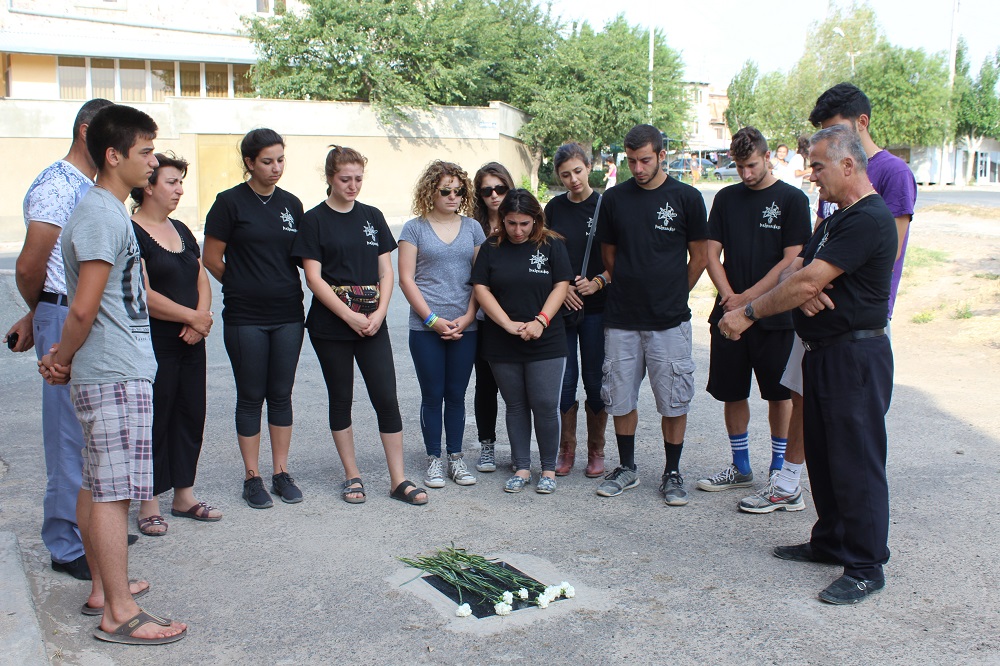
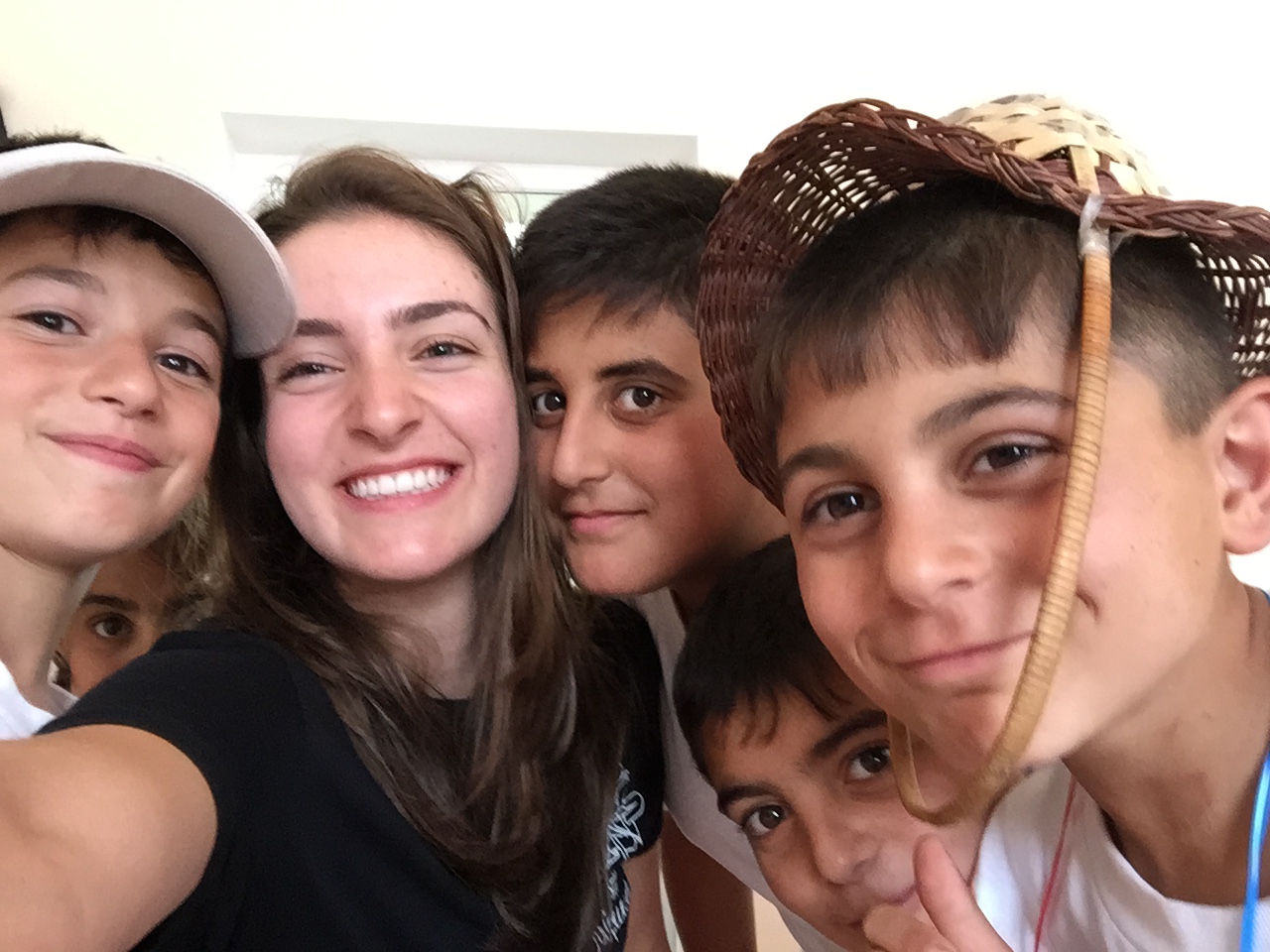
We visited a second monument later that day — less of a monument, more of a square piece of granite cemented in the ground. This was the exact spot the former village mayor, Unger Hratch Mouradian, was assassinated. The reasons for his assassination did not interest me as much as the impact that this man had on every single member of that community. The genuine sorrow in the locals’ eyes as we all stared at this square of granite was proof that not only did this man make a difference in his community, but he had the potential to do so much more. My fellow participants and I had not even met this man and yet we began to cry as they told us his story, about his many sacrifices. There was an instance where the unger explaining said, “Unger Hratch knew that the new generation would thrive if given the right means.” For the past 12 years I have always thought of my friends and myself when I heard the words “nor seroont” or “new generation’. In that moment I heard shouting in the distance from our campers calling, “Unger Koko!” That’s when I realized that Unger Hratch was correct because that “nor seroont” was standing in front of his memorial learning about his good deeds while being called for by the “Nor nor seroont” to ask about a lesson we taught them at jampar that day.
If there is one thing I know as fact, sacrifice is not a word that goes synonymously with the AYF Youth Corps program…but duty, might.
– Koko Abounayan
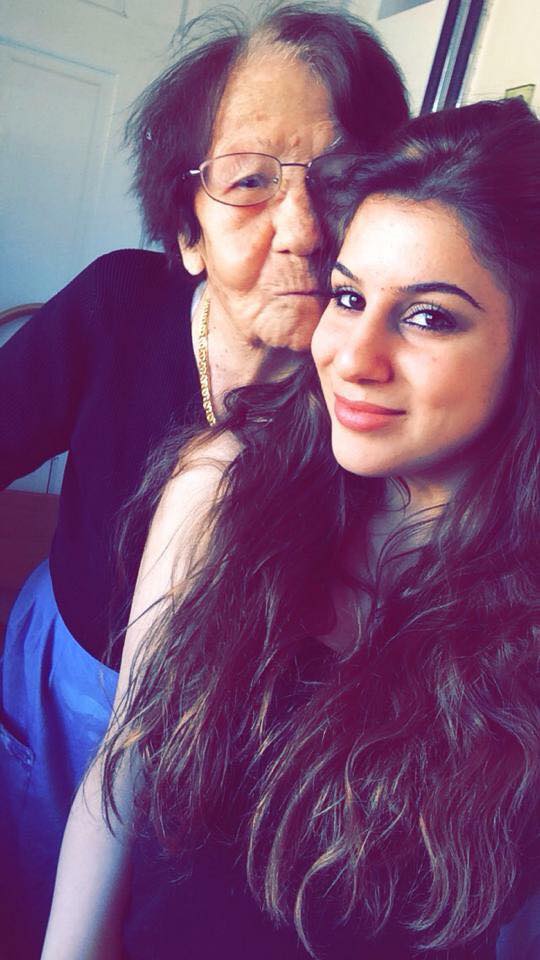 It was finally Monday morning, the day I had been waiting for impatiently. It was the start of my group’s jampar (camp) in Artsakh. I woke up anxious and excited to meet the countless young children in our village. Sadly, that same morning I woke up to a message from my mother letting me know that my grandmother had passed away. That was the worst news I could have received on a day when I was ready to set out to meet and interact with our campers.
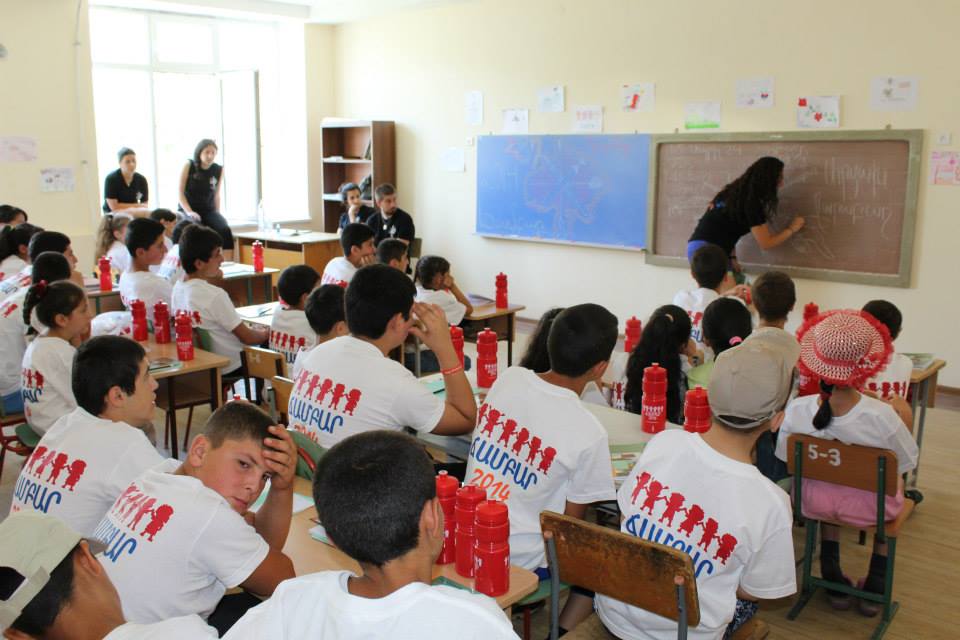
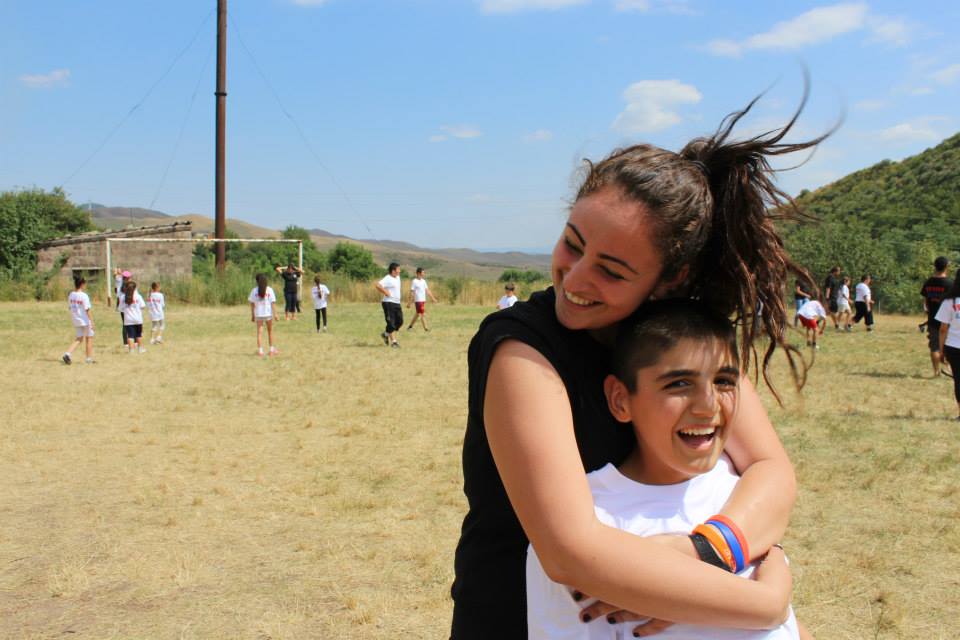
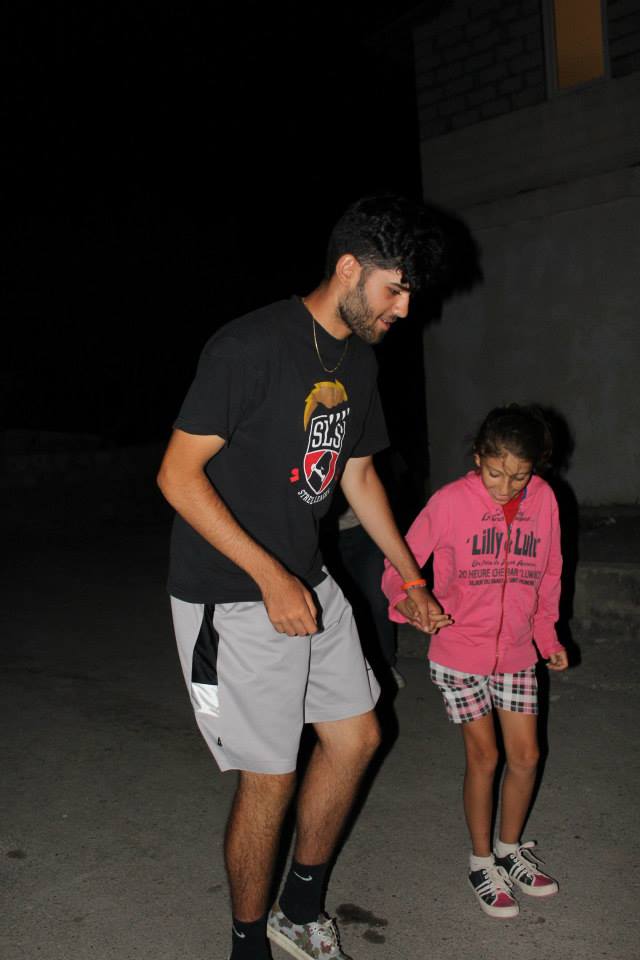 “Shad boyov eh, shad boyov eh”, was all the chatter I heard as I walked into the gym packed with eager little campers. It was registration day and I had the glorious position of occupying the campers’ time with games until camp officially began. I was frightened, since I have never worked with kids in my life. Yet I found myself excited to get camp underway in Proshyan. The transition from the practical European city of Yerevan to the village of Proshyan was remarkably easy. I fell in love with village life. The strong sense of community found in Proshyan was unlike anything I’ve experienced. The village has a strong ARF presence. Around Proshyan, the Tashnagtsoutyun is more than just a political party–it’s a lifestyle these villagers religiously follow. Words like “badanee,” “unger,” and “agoump” are held to an extreme I’m not used to experiencing. The strong traditional culture found here is what I want all us participants to extract back home to our own chapters. Wherever I go in Proshyan, I can feel the happiness our presence brings into the community. Children follow me through the streets wherever I go like I am of importance. Little do they know I’m usually just going up the street for some ice cream. On multiple occasions the villagers expressed their gratitude of how the Armenian diaspora has not forgotten about their homeland. They always leave me speechless and overcome with emotion. Nothing brings me more joy than knowing I’m instilling the best of both worlds onto our young generation. Knowing I’m shaping the future of Armenia is the most powerful feeling I have ever felt. From my explorations in Proshyan, it’s very obvious to me how far it has come as a village. It has such a bright future in these children and I personally want to remain a part of it. The hospitality, warmth and strength of the villagers have allowed me to find a home away from home. I love every minute of living here. My name is Harout Pomakian, I was born and raised in Los Angeles, but Proshyan adopted me.
 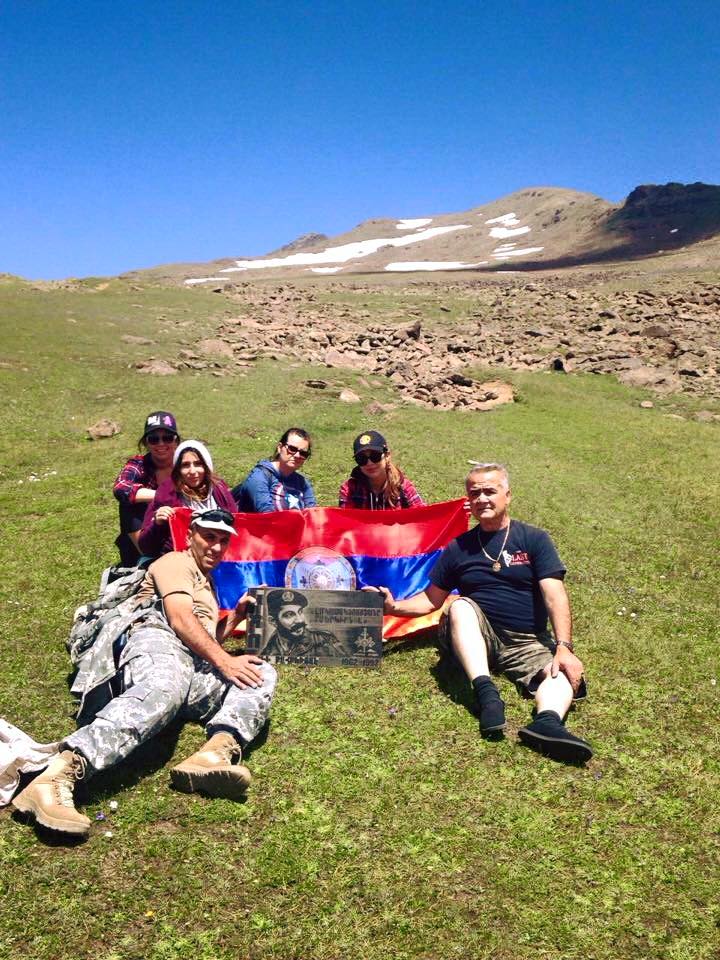 After an amazing first week at the Proshyan jampar, one of our weekend activities was hiking up Arakadz Ler. I’ve been to Arakadz Ler before, but I have never hiked up the mountain. On July 19th we went as a group with a few ARF members, and Badanees who attend jampar. As we were driving up the Badanees began singing revolutionary songs; songs we were not learning during camp. They were overjoyed to find that many of us knew the songs as well, and we began to sing together. Watching Rosa, Anahid, Marine’, and Aida sing, talk, and exchange riddles with us during our bumpy ride made me realize that our returning presence in Proshyan is truly making a difference in their lives. Seeing their excitement overwhelmed me with joy because I knew that I was experiencing something that not many people get to do. The villagers gave us advice on how best to climb the mountain – the girls assured us that they would be with us the whole time to offer their support. I continue to discover that they teach us as much as we are here to teach them.